

I Found Out Microplastics Are in Ovarian Tissue and Now I Can't Stop Thinking About My Tea Bags
A hormone spiral I did not plan to go down.

I found out that microplastics have been found in human ovarian follicular fluid and I haven’t been able to stop thinking about it since.
Not because I didn’t already know microplastics were everywhere. I knew. I’d seen the headlines. I’d watched the clips get shared in every group chat. I knew we collectively ingest approximately 50,000 microplastic particles a year through food and water alone, and that number goes up when you factor in what we inhale. I knew a single liter of bottled water contains an average of 240,000 particles, most of them the smaller, more invasive nanoplastics that cross biological barriers more easily.
I knew all of this the way you know something before you actually pull the thread.
And then I pulled the thread.
The Part That Stopped Me In My Tracks
A few months ago, I opened up Spotify to catch up on the latest episodes of The Diary of a CEO. It happened to be with Dr. Rhonda Patrick, a PhD biomedical scientist. She named three specific chemicals hiding in everyday plastics that are disrupting hormone levels at a measurable scale. The episode was called "Anti-Aging Expert: Stop Touching Receipts Immediately." Funny enough, I have been a receipt hater for this exact reason for years. I listened to it while working, with my Owala bottle in hand and my 8-year-old Lululemon leggings on. I felt the very specific discomfort creep up in someone who already knows what they're about to find.
So I went looking for the research.
Here is what the research showed. Microplastics have been found in human blood, lungs, liver, placenta, breast milk, and the hypothalamus. The hypothalamus is the part of your brain that runs your entire hormonal system. It signals the pituitary, the pituitary signals the ovaries, and the ovaries produce estrogen and progesterone. It’s the conductor of the entire hormonal orchestra.
Microplastics are in the conductor.
But the brain finding is what made me actually set my phone face-down on the table.
In February 2025, researchers at the University of New Mexico published a study in Nature Medicine examining brain tissue from human autopsies. The average human brain contains approximately five to seven grams of microplastics. A credit card weighs about five grams. We are walking around with a credit card’s worth of plastic in our brain matter, and the concentration in the brain is roughly ten times higher than in the liver or kidneys. They also found significantly higher concentrations in patients who went on to develop dementia.

Fun stuff, right?
Then, I read about a 2025 systematic review in Toxicology Letters studied the effect of microplastics specifically on the hypothalamic-pituitary-ovarian axis (don’t worry, I’ll explain this later) and found that microplastics accumulate in ovarian tissue, disrupt hormonal signaling, induce oxidative stress, and lead to hormonal irregularities, elevated androgens, and ovarian atrophy. In animal models. But the mechanism operating in those animals is the same one operating in humans, which is why in April 2026 the Lancet Diabetes and Endocrinology called for urgent coordinated scientific action to address what they described as a pervasive and under-recognized threat to hormonal and metabolic health.
And then the 2025 Italian study confirmed exactly what all of this was pointing toward. A research team checked the follicular fluid of 18 women undergoing IVF treatment. Follicular fluid is the fluid that surrounds and nourishes the egg before it is released. One of the most protected environments in the female body.
Microplastics were found in 14 of them.
I sat with that number for a while.
The Irony That Made Me Genuinely Angry
Here is the part nobody is saying out loud.
The women with the highest microplastic exposure are not the ones who never think about their health. They are the ones who think about it constantly.
And it isn’t just the obvious stuff. It’s the morning ritual that feels like self-care.
A single plastic tea bag steeped in boiling water releases approximately 11.6 billion microplastic particles and 3.1 billion nanoplastics into your cup, according to a McGill University study published in Environmental Science and Technology. A 2024 study in Chemosphere confirmed those particles are small enough to be absorbed by human intestinal cells and reach the bloodstream. The woman with the perfect morning routine, kettle on at 6am, chamomile steeping in her “natural” pyramid bag, is drinking billions of plastic particles before she’s even checked her phone. (The pyramid-shaped silky bags are almost always nylon or PET mesh, by the way. The ones that feel the nicest are usually the worst offenders.)
It’s the water bottle. It’s the Tupperware. It’s the receipt from the CVS.
Thinx settled a class action lawsuit in 2023 over PFAS contamination in their products. The vulva is one of the most absorbent areas of the body, which makes this an especially unwelcome piece of information.
Brands like Flower Girl have built their entire product line around exactly this problem: PFAS-free, TENCEL fabric, no synthetic dyes, tested across more than 100 fabric blends to get there.

And then my partner, after watching me and his brother go down this rabbit hole, started quietly Googling what he was putting near his most sensitive parts. He stumbled upon NADS. A brand of non-toxic, GOTS-certified organic cotton men's underwear whose entire marketing premise is, verbatim, "the optimal home for your package." I gladly supported this rabbit hole :).
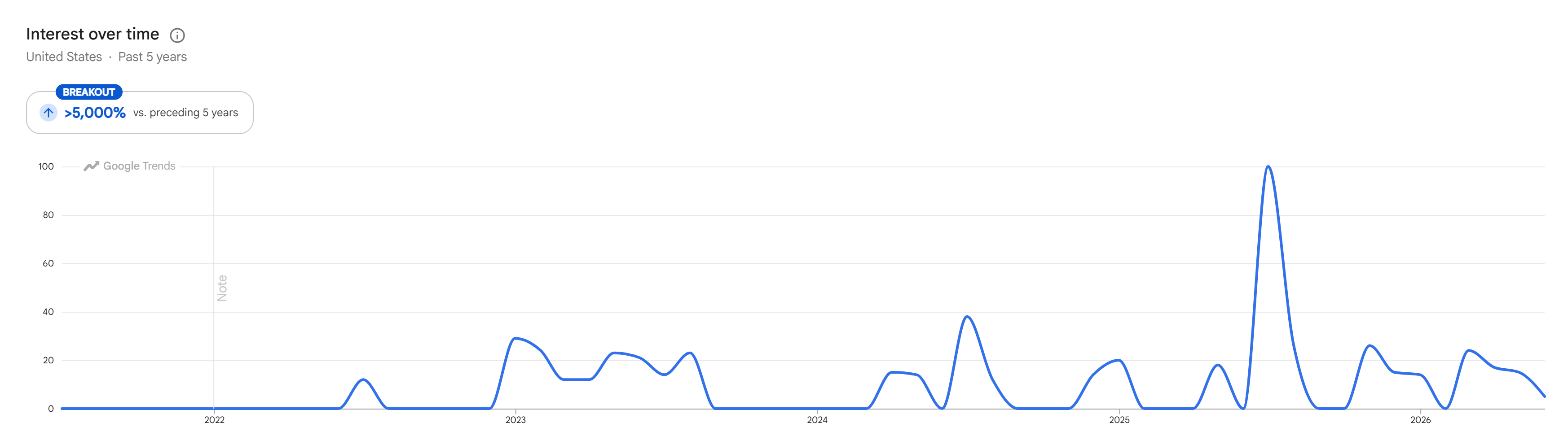
The fact that “PFAS-free period underwear” is now a specific search category in 2026 tells you everything about how far the contamination had spread before anyone thought to ask.
And here is the part that really matters: economic pressure makes it worse. Glass containers cost more than plastic ones. Stainless steel bottles cost more than a pack of disposable plastic ones. Loose leaf tea with a reusable strainer requires a different habit than a box of teabags. The people with the least financial flexibility are often the most exposed, because the cheapest and most convenient options are the ones shedding the most particles. This is as much of a systems problem as it is a personal health problem.
Ok, Now Let’s Get Back to The Science
Here’s the mechanism that ties all of this back to your hormones specifically.
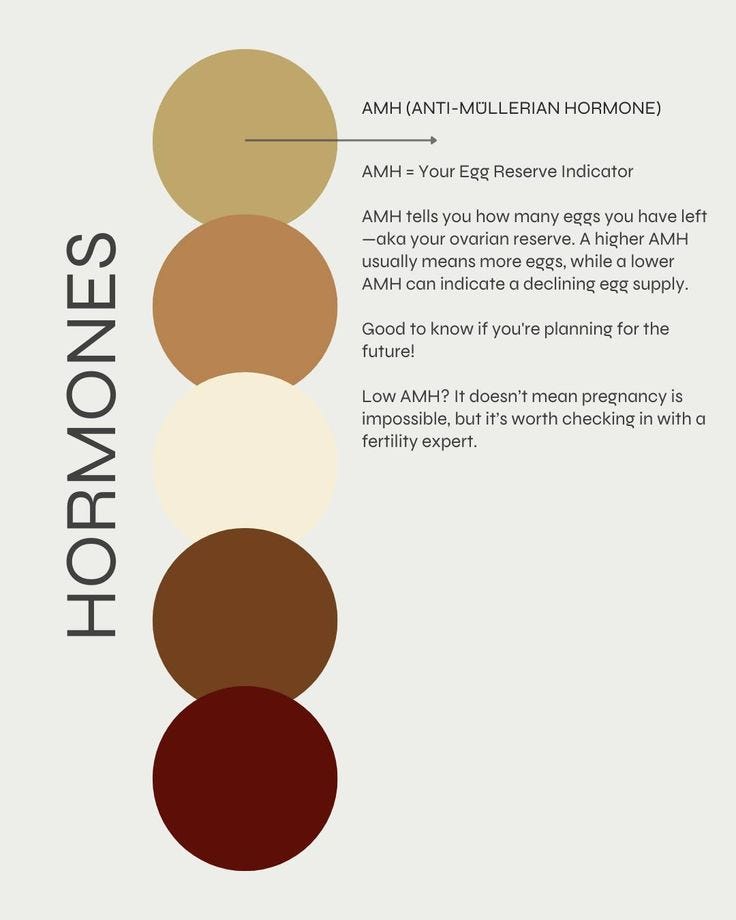
BPA is structurally similar to estradiol, the primary female sex hormone, and binds to estrogen receptors directly. In the March 30 episode, Dr. Patrick noted that BPA exposure in adolescent boys was associated with a 50% reduction in testosterone. Phthalates, found in food packaging and personal care products, have been associated with lower AMH levels in a 2024 study published in eClinicalMedicine. AMH is anti-Müllerian hormone, the primary marker of ovarian reserve. Lower AMH means fewer eggs remaining and a shorter reproductive window.
Here is the part that really gets me: “BPA-free” does not mean phthalate-free. It does not mean BPS-free. BPS, the most common BPA replacement, binds to estrogen receptors with comparable affinity. The women buying BPA-free bottles are still being exposed to the chemicals that replaced BPA.
The wellness industry told us to eat clean, move our bodies, manage our stress. It did not mention checking what our tea bags were made from, or what our period underwear (or tampons+pads) was treated with, or what was coating the receipt the pharmacist handed us on the way out.
Where the Conversation Is Going
The Global Wellness Summit named microplastics one of the defining health shifts of 2026 because this is the year the conversation officially moved from “is this a problem” to “what are we going to do about it.” On April 2, 2026, the EPA and Department of Health and Human Services added microplastics to the federal contaminant candidate list for the first time in history. That is the regulatory step that starts the clock on filtration standards and exposure limits. IVF clinics are now advising patients to reduce plastic exposure as part of preconception care, not because the human evidence is conclusive, but because the mechanism is clear enough that waiting feels irresponsible.
This isn’t only an environmental story. It was never just an environmental story.
It’s a hormone story. And it has been a hormone story for a long time. We just weren’t calling it that.
What I Actually Changed (And What I’m Not Losing Sleep Over)
I’m not catastrophizing this, because that is not useful to either of us.
I replaced my plastic water bottle with stainless steel (think about the straw you’re drinking through too), because 240,000 particles per liter is a math problem I can actually solve. I stopped heating food in plastic (looking straight at you Trader Joe’s microwave rice) because heat is where the majority of chemical leaching happens and there is genuinely no upside. I decline paper receipts because thermal paper is coated in BPA, it absorbs through skin contact, and Dr. Patrick specifically noted that using any lotion before handling a receipt increases dermal BPA absorption by roughly 100-fold. (Put the hand cream down before you touch that receipt. Genuinely.)
I also replaced my scratched non-stick pan (and truly cringe when I see someone use a fork to scramble their eggs on a non-stick). Cast iron is not a personality. It’s just a pan that doesn’t shed particles into your food.
And yes, I looked into the underwear situation. If you’re using a mainstream period (or regular) underwear brand that hasn’t explicitly confirmed PFAS-free testing, it is worth five minutes of your time. Plus, cotton or other natural fabrics feel better anyway.
None of this is expensive. A lot of it is free. The glass jars from pasta sauce cost nothing. The stainless steel bottle is a one-time purchase. Going digital with receipts takes three seconds (or 3 seconds to politely decline).
The truth is, you can’t eliminate exposure. Nobody can, in 2026. But you can meaningfully reduce the daily load in the places where the mechanism is clearest and the swap is simplest.
Start with the water bottle.
Found at Midnight☁️
A 2025 study in the Journal of Hazardous Materials looked specifically at microplastic concentrations in human follicular fluid and their association with diminished ovarian reserve. The title is "Associations Between Concentrations of Microplastics in Follicular Fluid and the Risk of Diminished Ovarian Reserve." It's the paper that starts connecting what you're ingesting to what may be happening to your egg quality over time. Worth knowing about.
If this spiral found you, congrats, you’re already one of the few paying attention.
Next Thursday: the thing your morning cortisol is actually telling you, and why it’s not about stress management.
See you in the spiral.
Rossi
P.S. if you forwarded this to someone, you’re doing the lord’s work. The link to subscribe is below.
"I knew all of this the way you know something before you actually pull the thread" is exactly how the microplastics conversation lives in most people's heads.
The follicular fluid finding is the one I keep coming back to specifically. Gut, blood, placenta -- those findings are alarming but somehow feel downstream. Follicular fluid is the immediate environment where eggs develop. That's a different category of "this is everywhere now."
The tea bags spiral I am now also having. Thank you and I'm sorry.